
Trees
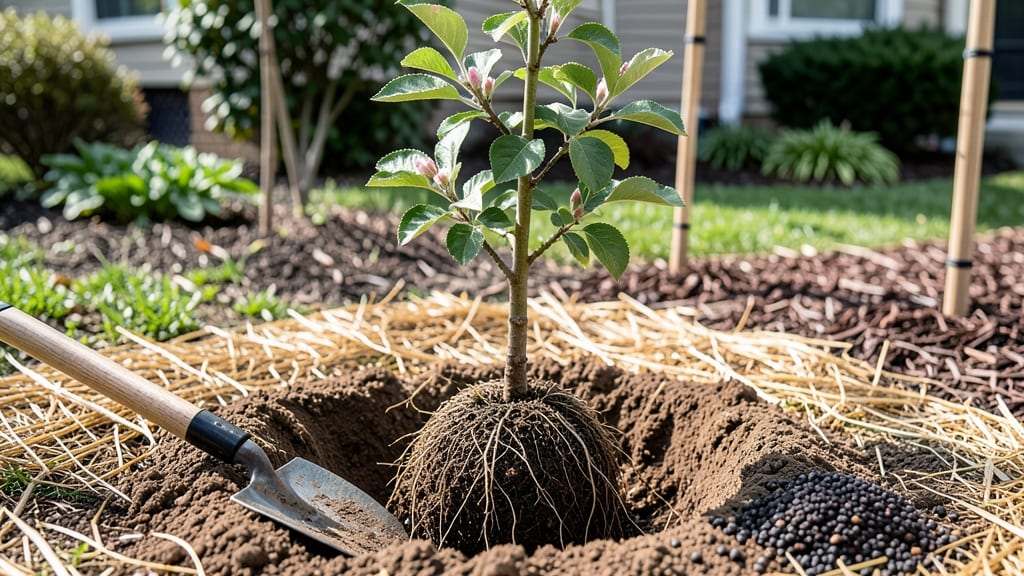
Timing your 🍎 apple tree planting in Connecticut isn't just about the calendar—it's about dodging frost, nurturing roots, and setting your orchard up for success. Planting too early risks frost damage, while waiting too long can stunt growth before winter arrives.
The ideal window is late April through early June, but local microclimates (like coastal vs. inland zones) can shift those dates by 2 weeks or more.
Why does this matter? Connecticut's 6a zone means your young trees need strong root systems before winter hits. Bare-root saplings planted in early spring (before buds swell) establish faster, while container-grown trees offer more flexibility if you miss the prime window.
The key is matching your location's last frost date—typically around April 15—but always verify with your local extension office.
Beyond dates, soil prep is your secret weapon. Connecticut's clay-heavy soils need amendments to improve drainage, and pH levels should sit between 6.0 and 6.5 for optimal growth.
We'll cover how to test your soil and adjust it, plus why some regions (like the Litchfield Hills) need extra care compared to New Haven's milder microclimate.
Let's break down the exact steps to plant your 🍎 apple tree at the perfect moment—whether you're a first-time gardener or a seasoned orchard keeper.
You'll learn how to read frost forecasts, choose the right tree type, and give your new sapling the best shot at thriving for decades to come.
Optimal planting windows in Connecticut by microclimate Zone
Connecticut’s diverse geography—from coastal shorelines to inland valleys and high-elevation hills—means one planting window doesn’t fit all. The state spans USDA Zones 5b to 6b, with microclimates that shift frost dates by weeks.
For example, New Haven’s last frost often arrives by April 15, while Litchfield’s hills may see frost until May 1. Timing your planting to these zones maximizes survival and growth.
Bare-root apple trees are best planted in early spring (March–April) before buds swell, while container-grown trees can go in until early June. However, fall planting (October) is also viable if done 6–8 weeks before ground freezes.
The key? Avoid planting when soil temps drop below 40°F, which stunts root development.
Coastal areas (e.g., Stamford, Groton) have milder winters and can plant 2–3 weeks earlier than inland zones. Inland regions (Hartford, Middletown) should wait until after April 15, and high-elevation spots (Torrington, Norfolk) may need to delay until mid-May to avoid late frosts. Always check your local CT Agricultural Experiment Station frost maps for precision.
| Zone | Last Frost Date | Best Planting Window | Backup Window | Key Risk |
|---|---|---|---|---|
| Coastal (5b–6a) | April 1–15 | March 15–April 15 | June 1–15 | Salt spray damage |
| Inland (6a–6b) | April 15–May 1 | April 1–May 10 | May 15–June 1 | Late spring frost |
| High Elevation (5a–5b) | May 1–15 | May 1–June 1 | July 1–15 | Short growing season |
If you miss the primary window, container-grown trees can handle late planting (up to early June), but expect slower first-year growth. For bare-root trees, fall planting in October works if soil isn’t frozen, but roots must establish before winter.
In Zone 5b areas, this means planting by October 15 at the latest.
Pro tip: Use frost cloth for early spring plantings in inland zones to protect young trees from 28–32°F dips. This buys critical time for root establishment. Pair this with a mulch ring (4–6 inches of straw) to insulate roots and retain moisture during Connecticut’s unpredictable springs.
For dwarf varieties (like ‘Liberty’ or ‘Enterprise’), timing is even more critical—their smaller root systems struggle with delayed planting. Aim to get them in the ground by April 15 in inland CT to avoid stunted growth. Standard-sized trees (e.g., ‘Golden Delicious’) are more forgiving but still benefit from early planting.
Local nurseries like Burr’s Seed & Plant or The Plant Farm often stock CT-adapted varieties (e.g., ‘Cortland’, ‘McIntosh’) that thrive in these microclimates. Ask for dormant-season hardiness ratings—trees labeled for Zone 5 will handle high-elevation CT winters better than Zone 6+ varieties.
Remember: Soil temperature matters more than air temperature. Use a soil thermometer to confirm temps are above 45°F before planting. Cold soil slows root growth by 50% or more, leaving trees vulnerable to winter stress.
In wet springs (common in CT), wait until soil drains well to avoid root rot.
Finally, avoid planting during heatwaves (above 85°F). Transplant shock spikes when roots can’t absorb water fast enough. If you must plant in summer, do it on a cloudy day and provide daily shade cloth for the first 2 weeks.
This is especially critical for container-grown trees, which dry out faster.
How Connecticut’s frost patterns affect apple tree survival
Connecticut’s unpredictable frost patterns can turn a promising apple orchard into a heartbreaking loss if you’re not prepared. Unlike milder climates, CT’s late-spring frosts often strike between April 15 and May 15, just as apple blossoms begin to open.
These frost events can kill delicate flowers, reducing next year’s harvest by up to 90% if severe.
Apple trees bloom in response to temperature shifts, typically after 50-70 days of chilling hours (below 45°F). In CT’s USDA Zone 6a, this usually aligns with late April. However, a sudden cold snap can freeze blossoms before they pollinate, leaving you with no fruit for months.
That’s why dormant planting in fall (October-November) gives roots a head start before winter, while spring planting after last frost (late April-early June) protects blossoms. High-elevation areas like the Berkshires face even higher frost risks, so container-grown trees planted in early spring often survive better than bare-root saplings.
⚠️ Frost Warning for CT Growers
- Blossoms die at 28°F—common in CT’s late spring
- Young trees (1-3 years) are most vulnerable to frost damage
- Mature trees (5+ years) recover better but still suffer fruit loss
- Use frost cloth for new plantings if late frost is forecasted
Another critical factor is soil temperature. Roots need 40°F+ soil to establish before buds swell. In inland CT (e.g., Hartford), soils warm faster than coastal areas (e.g., New London), creating a 2-3 week planting window difference.
Always check local frost date averages—your town’s last frost can vary by 10 days or more from state averages.
For fall planting, aim for 6-8 weeks before first frost (typically by October 15). This gives roots time to knit before winter dormancy. In contrast, spring planting should wait until after May 1 in most of CT to avoid frost risks to new growth.
High-elevation areas like Torrington may need to delay until mid-June.
Protect your investment by monitoring CT’s frost alerts from the National Weather Service. A simple frost cloth over blossoms during late spring can save your harvest. And remember: dwarf varieties (like ‘Liberty’ or ‘Enterprise’) bloom slightly later than standards, giving them a 3-5 day advantage against frost.