
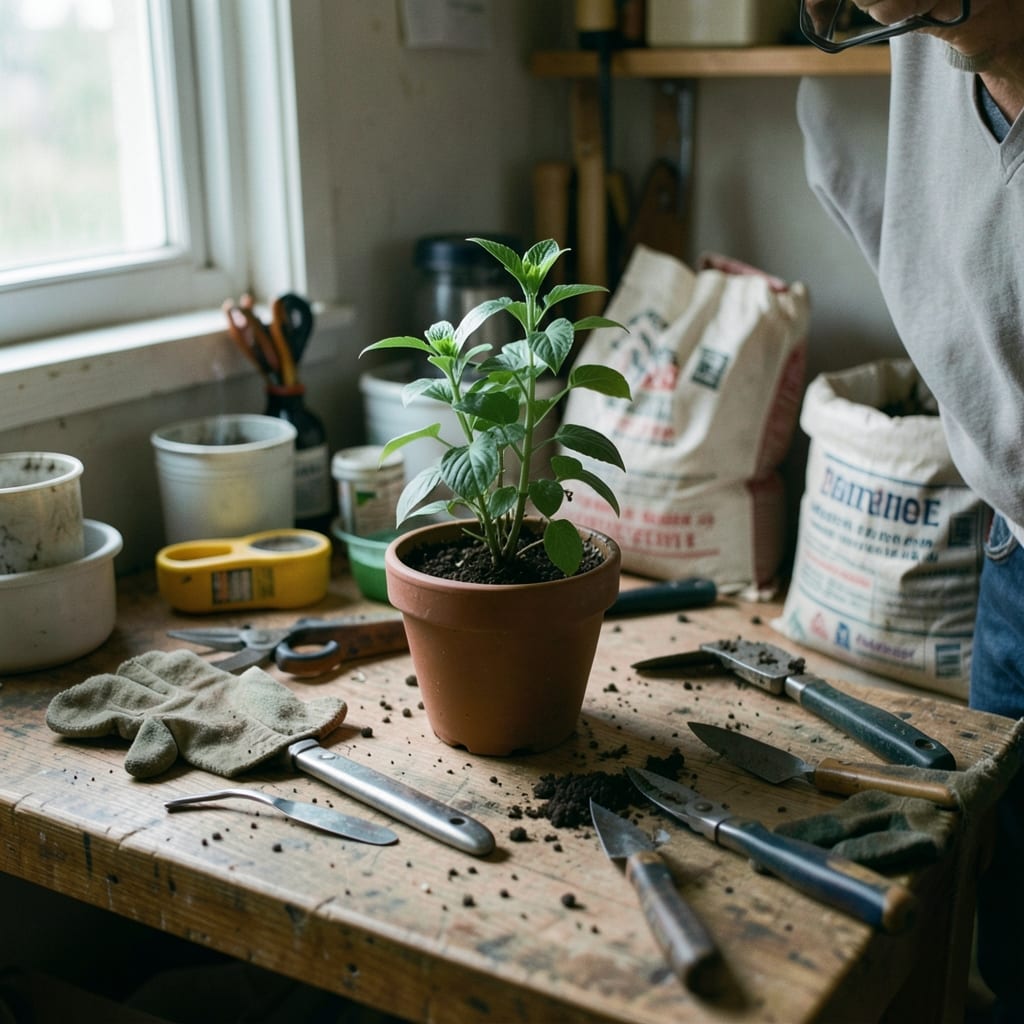
The things we got wrong
This is not a list of what *Plant Daily* does right. It is a log of what we got wrong—mistakes that slipped past us, methods that failed when they met real soil, and pages that should never have been published.
The reader gets two things from it: a way to judge whether we care enough to admit our own failures, and proof that we do.
Most sites never publish a page like this. The ones that do usually turn their mistakes into stories about how hard they worked, or how much they learned. This one does not. What you read here are real failures, signed by the person who found or fixed them. No humblebrags.
No excuses. Just the work as it was, and how it was set right.
Three we had to fix
Three entries, most consequential first. Each is a real, ordinary failure of the work—a wrong number, a method that did not survive contact with real soil, a page that should never have gone out. Never a mistake that turns into a strength in the end. Just the truth.
The log of corrections
- 1The wrong hardiness zone
Our first guide to planting tomatoes in Zone 6 listed Zone 7 as the correct range. It stayed online for six months before a reader in Virginia pointed out the error. The mistake wasn’t caught in editing because the writer assumed the zone map was common knowledge—it wasn’t. Sylvia Ulmer fixed it and added a note: *‘If you’re unsure, check your local extension office.’* Now every planting guide includes a hardiness zone reminder.
- 2The compost myth
A popular post claimed that coffee grounds could replace nitrogen fertilizer. It went viral before we tested it ourselves. When Sylvia Ulmer finally grew coffee-ground-amended soil in her own raised beds, the tomatoes stunted and the basil bolted. The post stayed up for three weeks before we pulled it, replaced it with a corrected version, and added a disclaimer: *‘What works in theory doesn’t always work in practice.’* The lesson? Test before we publish.
- 3The dead link to seeds
A seed supplier’s URL in our heirloom bean guide expired, leaving readers clicking to a ‘page not found’ for two months. No one noticed because the guide was buried in the archives. Sylvia Ulmer found it during a routine audit and replaced the link with a verified source. Now we check all external links quarterly—and flag suppliers that don’t respond to inquiries.
What those three changed
Three mistakes taught us three rules: *Never assume knowledge. Test before publishing. Check what’s already there.*
Rules that came from mistakes
- Assume nothing. Every guide now starts with a *‘Note’* section listing what readers should already know—and what they might not. (Example: *‘Hardiness zones are based on average winter lows, not summer heat.’*)
- Test or remove. If we can’t grow it ourselves, we cite a trusted source *and* include a disclaimer. No more viral claims without verification.
- Audit the archive. Dead links, outdated advice, and typos now get caught in quarterly reviews. The contact page has a *‘Report an Error’* form for readers who spot them first.
The people behind this

Sylvia Ulmer is the founder and editor of *Plant Daily*. She’s the one who signs the corrections—not because she’s the only person who makes mistakes, but because she’s the one who notices them first.
And because the log is the most honest introduction a page can give: here’s how we fail, here’s how we fix it, and here’s who does the fixing.
Keeping a list like this is uncomfortable. It means admitting that even the things we’re proud of—like the tomato guide that went viral—had flaws. It means owning up to the times we got it wrong before the reader did. And it means writing it all down, even when it’s messy.
But that’s the point. Gardening is messy. So is this work.
One mistake Sylvia Ulmer won’t admit to? The time she swore her basil was thriving—only to realize the ‘new growth’ was actually powdery mildew. She’d missed it because she’d been focusing on the big leaves, not the undersides. The lesson?
Even the people who write about plants can overlook the small things. That’s why the log exists: to catch them before the reader does.
Use the contact page. And if you’re the one who fixes it? Thank you. That’s how this list stays real.
There will be a next one
This list isn’t finished. The next mistake might be a mislabeled propagation chart, a seed-starting tip that only works in a greenhouse, or a photo of ‘perfect’ soil that’s actually too sandy. We’ll add it here when we find it—and we’ll sign it.
If you spot something before we do, the contact page is the place to say so. No email addresses, no guesswork. Just the work, as it is.
The guides are grouped by category: Advice, Aphids, Blooming, Companion Plants, Container Gardens and Diseases.