Plants
If you've ever planted garlic in North Dakota only to watch it struggle through harsh winters or bolt in the heat, you're not alone.
The key to growing robust 🧄 garlic in USDA Zone 3b-5a lies in planting at the precise moment when the soil cools but before the ground freezes—typically between mid-September and early October.
This narrow window isn't just about timing; it's about giving your garlic the head start it needs to develop strong roots before winter sets in. Unlike warmer climates where spring planting works, North Dakota's short growing season demands fall planting for hardneck varieties to thrive.
The goal? Plant when soil temperatures drop to 40–50°F—that's your sweet spot for success.
Why does this matter? Because getting it wrong means weak bulbs, poor flavor, or even total crop failure. But when you nail the timing, you're rewarded with plump, flavorful garlic that outperforms anything you'll find in stores.
I'll walk you through the exact steps to plant your garlic at the perfect moment, plus how to adjust for North Dakota's microclimates and avoid common mistakes.
Ready to grow garlic that's hardier than the winters you face? Let's dive into the climate-proof timeline that'll give you the harvest you deserve—late July to early August—without the guesswork.
Optimal planting windows for North Dakota garlic success
North Dakota’s Zone 3-4 climate demands a precise fall planting window for garlic—any deviation risks weak bulbs or total crop failure. Unlike milder regions, spring planting here almost never works because garlic needs cold stratification to form proper bulbs.
The key is planting when soil temperatures drop to 40–50°F but before hard frost locks the ground.
For hardneck garlic (the best choice for ND), aim for a 6-week window between September 15 and October 31. This gives cloves time to establish roots before winter while avoiding the December planting trap, which often leads to rot.
Early October is ideal in most of ND, but adjust based on your microclimate—western areas can plant slightly later.
Soil temperature is your best guide. Use a soil thermometer to confirm readings of 40–50°F at 4-inch depth. If temps drop below 32°F, garlic may freeze before rooting.
In Fargo or Grand Forks, this usually happens by late October, while Bismarck or Dickinson can wait until early November in some years.
Why spring planting fails in ND: Garlic planted in spring misses the critical cold stratification period, leading to small, pungent bulbs or no harvest at all. The plant needs 60–90 days below 40°F to form proper bulbs—a window only fall planting delivers reliably in Zone 3–4.
Choose hardneck varieties like 'Music' or 'German White', bred for cold climates. These produce large, flavorful bulbs with edible scapes, while softneck varieties struggle in ND’s harsh winters. Save seed from your harvest to maintain hardiness over generations.
| Planting Stage | North Dakota Timeline | Key Conditions |
|---|---|---|
| Soil Prep | August 15–September 1 | Soil temp 60–70°F, pH 6.0–7.0 |
| Planting Window | September 15–October 31 | Soil temp 40–50°F, 6 weeks before frost |
| Winter Dormancy | November–March | Snow cover protects roots; avoid disturbance |
| Spring Growth | April–June | Soil temp >50°F; scapes emerge |
| Harvest Ready | Late July–Early August | Lower leaves brown; bulbs firm |
If you miss the fall window, early spring planting (March) is a last resort. Plant cloves 2 inches deep in well-draining soil and mulch heavily to protect from late frosts. However, bulbs will be smaller and less flavorful than fall-planted garlic. For best results, always prioritize the September–October window.
Test your soil’s readiness with the "finger test": Push your finger into the soil. If it’s easily penetrable but cool to the touch, it’s time to plant.
Hard, frozen soil means wait; crumbly, warm soil means you’ve missed the window. In ND, this test is your most reliable indicator of planting success.
Pro tip: Plant garlic in raised beds if your yard has heavy clay soil or poor drainage. Raised beds warm up faster in spring, extend the growing season, and prevent the rot that plagues waterlogged cloves during ND’s wet springs. Add compost and sand to improve drainage if needed.
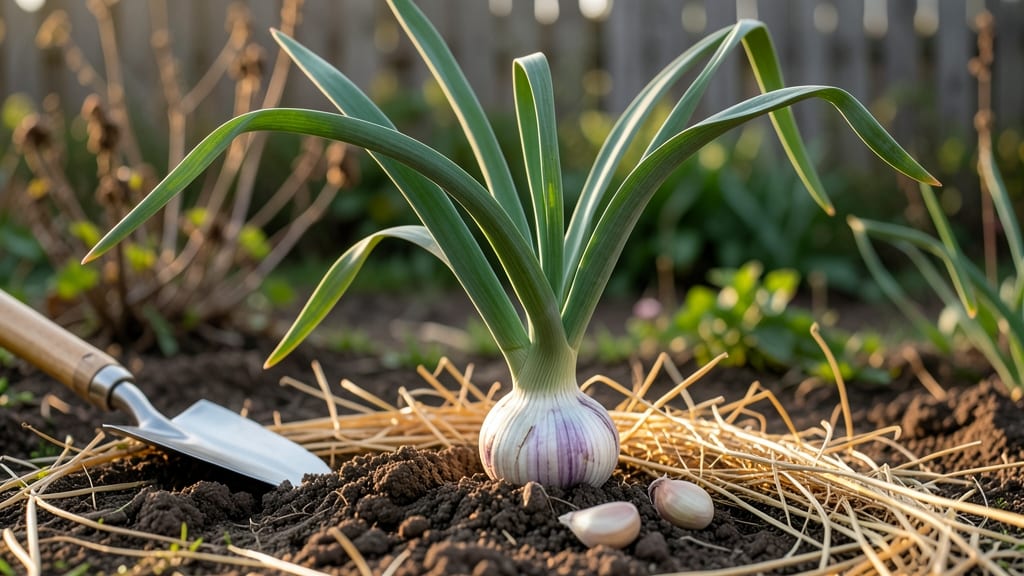
Once planted, mulch with straw (4–6 inches) to insulate cloves through winter. This prevents heaving (when soil freezes and pushes bulbs out) and maintains consistent soil temps. Remove mulch in early spring to allow sunlight to stimulate growth.
Remember: In North Dakota, timing is everything. A well-timed fall planting in Zone 3–4 yields large, hardy bulbs that store well until next summer. Master this window, and you’ll never buy garlic again—just save seeds from your harvest for next year’s climate-proof crop! 🧄
Optimal planting windows for North Dakota garlic success
North Dakota’s USDA Zones 3b-5a demand a precise fall planting window for garlic—any earlier or later, and you risk poor bulb development. The ideal time is September 15 to October 31, when soil temperatures drop to 40–50°F but before hard frost locks the ground.
This 6-week window ensures cloves establish roots before winter dormancy.
For hardneck garlic (the best choice for ND), aim for planting 4–6 weeks before the first frost. In Fargo, that’s typically by October 15, while western regions like Dickinson can push it to November 1. Softneck varieties tolerate slightly later planting but rarely thrive in ND’s climate.
Spring planting is a common mistake in Zone 3–4. Cloves planted after March 1 often bolt prematurely due to ND’s short 120-day frost-free season, resulting in small, pungent bulbs. Fall-planted garlic overwinters, then grows vigorously in spring.
| Stage | Action | ND-Specific Tip |
|---|---|---|
| Soil Prep | Test pH (6.0–7.0), amend with compost | ND soils are often alkaline—add sulfur if pH >7.0 |
| Planting Window | Sep 15–Oct 31 | Eastern ND: earlier (by Oct 1); Western ND: later (until Nov 1) |
| Depth | 2 inches, pointy-end up | Use mulch (straw) to insulate cloves—critical for Zone 3b |
| Spacing | 4–6 inches apart | Tighter spacing (3 inches) works in raised beds for ND’s short season |
Timing isn’t just about dates—it’s about soil temperature. Use a soil thermometer to confirm 40–50°F at 4-inch depth. In early September, ND soils often still run warm, delaying root establishment. Wait until temps stabilize to avoid rot or stunted growth.
Pro tip: Plant hardneck varieties like 'German White' or 'Music', bred to handle ND’s winters. These produce scape shoots in summer (edible!) and store better than softnecks. Save cloves from last year’s harvest for planting—store them in a cool, dark place (50–60°F) until September.
Miss the fall window? You can try early spring planting (March 1–15), but bulbs will be smaller and less flavorful. ND’s late frosts (often until May 15) make spring planting risky. Prioritize fall for maximum yield and hardiness.