
Plants
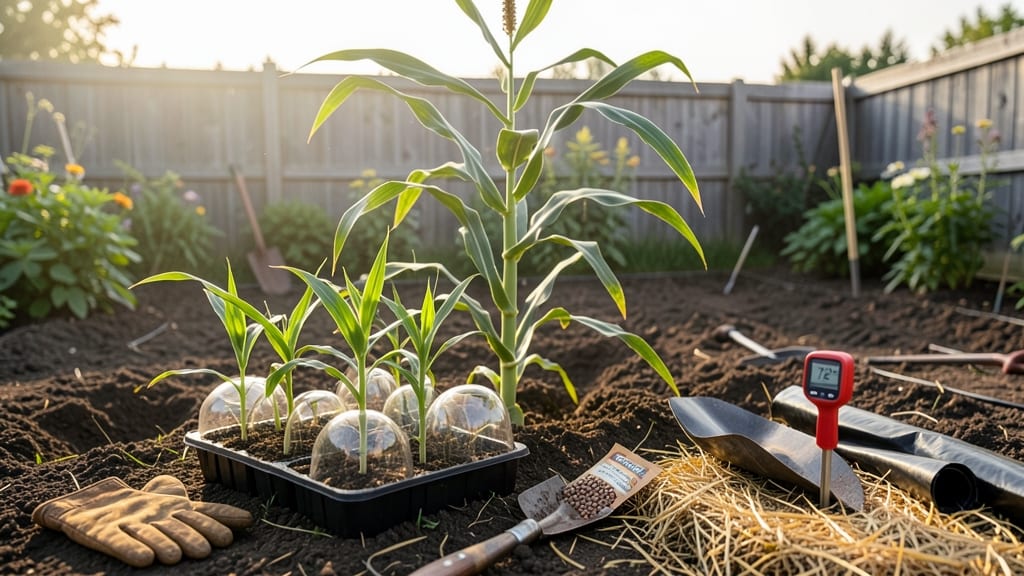
Timing your 🌽 corn planting in West Virginia isn’t just about checking a calendar—it’s about mastering the soil temperature and frost-free window to avoid stunted plants or wasted effort. With the state’s 6a-7a climate, waiting too long risks early frosts, while planting too soon means cold soil stalls germination.
Most gardeners in West Virginia aim for mid-April to late May, but the real secret is soil warmth. Corn thrives when temperatures hit 50°F–60°F, and a simple soil thermometer can save you from guessing.
High-altitude areas like the Alleghenies may need to push planting into early June for reliable success.
This guide breaks down the exact window for your zone, including variety-specific tips for 80–110-day harvests and soil prep tricks to boost yields. Whether you’re growing ‘Silver Queen’ for heat tolerance or ‘Peaches and Cream’ for early harvests, we’ll cover it all.
Skip the trial-and-error—learn how to sync your planting with West Virginia’s unpredictable spring, so you’re harvesting plump ears from late July to October instead of watching your crop fail. Let’s get started.
West Virginia corn planting dates by soil temperature (not just calendar dates)
Planting corn in West Virginia isn’t just about checking the calendar—it’s about soil temperature. Corn seeds need 50°F–60°F soil to germinate properly. Air temperature can fool you; a warm day doesn’t mean your soil is ready.
In lowland areas like Charleston, soil warms faster than in mountain regions like Lewisburg, where cooler nights delay warming.
Use a soil thermometer (insert 2 inches deep) to confirm readiness. If your soil is below 50°F, wait—cold soil slows germination and invites rot. I’ve seen corn seeds planted too early sprout weakly or fail entirely, only to regret it when summer arrives.
Patience here pays off with stronger stalks and better yields.
West Virginia’s USDA zones 6a–7a mean your frost-free window varies. Low elevations (e.g., Huntington) may plant as early as mid-April, while high elevations (e.g., Beckley) should wait until late April to early May. Microclimates matter—river valleys warm faster than ridges.
Here’s the golden rule: Plant when your soil hits 55°F consistently for 5–7 days. This usually aligns with late April to early May for most of the state.
Use black plastic mulch to warm soil faster if you’re in a hurry, but avoid it if you’re prone to late frosts.
| Soil Temp Range | Planting Window | Risk Level | Action |
|---|---|---|---|
| Below 50°F | Wait | High | Use row covers to warm soil |
| 50°F–55°F | Early April (lowlands) | Medium | Plant shallow (1 inch deep) |
| 55°F–60°F | Mid-April to May | Low | Ideal planting time |
| Above 60°F | Late May (backup) | High (late season) | Choose fast-maturing varieties |
If you’re in a high-altitude area (e.g., Pocahontas County), add an extra week to your planting timeline. Cold nights can stall growth, so monitor your plants closely. I’ve had corn planted in early May thrive in Charleston but struggle in Elkins due to cooler nights.
For container growing, soil warms faster, so you can plant 1–2 weeks earlier than in-ground. Use black pots to absorb sunlight and speed up warming. Just ensure your containers are at least 12 inches deep—corn roots need space to grow.
Pro tip: Plant a test row a week before your main planting. If the test row germinates within 7–10 days, your soil is ready. If not, wait another week. This simple trick saves you from planting too early and risking frost damage.
Remember, late planting (after June) still works if you choose short-season varieties (e.g., ‘Early Sunglow’, which matures in 70 days). But expect smaller ears. Timing is everything—get it right, and you’ll enjoy homegrown corn by late summer!
How to calculate your West Virginia frost-free window for corn success
West Virginia’s frost-free window is your golden ticket to corn success, but it’s not as simple as checking a calendar.
The USDA Plant Hardiness Zone Map (zones 6a–7a) gives a starting point, but elevation and microclimates—like the mountain valleys or river valleys—can shift your frost dates by 2–4 weeks.
For example, Charleston’s average last frost is April 15, but Pocahontas County might see frost until May 1.
To pinpoint your exact window, start with the USDA frost map (available at [USDA ARS](https://www.ars.usda.gov)), then adjust for elevation. Add 370 feet of elevation = roughly 1 extra week of frost risk.
If you’re in the Appalachian highlands, add a 2-week buffer to account for late frosts. For river valleys like the Kanawha Valley, subtract 1 week since they warm faster.
- Step 1: Find your USDA zone (6a–7a for WV) and note the average last frost date.
- Step 2: Adjust for elevation: Add 1 week per 370 ft above 1,000 ft.
- Step 3: Add a 2-week buffer if you’re in high-risk zones (e.g., Pocahontas, Tucker County).
- Step 4: Plant short-season varieties (80–90 days) 2 weeks earlier than your adjusted date.
- Step 5: For late varieties (100+ days), use June 1 as a cutoff.
For gardeners in high-altitude areas (like Monongahela National Forest), consider a backup planting strategy. If your primary planting window fails due to frost, have transplant-ready seedlings (purchased or started indoors) to drop in 2 weeks after your adjusted last frost date.
This gives your corn a 30-day head start before the first frost of October.
Pro tip: Use a frost calendar from your local Cooperative Extension Service (e.g., WVU Extension) for hyper-local data. They often track actual frost dates from nearby weather stations, not just averages.
For example, Morgantown’s 2023 last frost was April 22, 2 weeks later than the average—proof that real-time adjustments save your crop.
Once you’ve nailed your frost-free window, pair it with soil temperature checks (from Section 1) to finalize your planting date. Corn seeds won’t germinate below 50°F, so even if the frost risk is gone, wait until soil hits 60°F for reliable sprouting.
This two-step process—frost-free window + soil temp—is how West Virginia gardeners consistently grow corn, even with our unpredictable springs.
🌽