
Plants
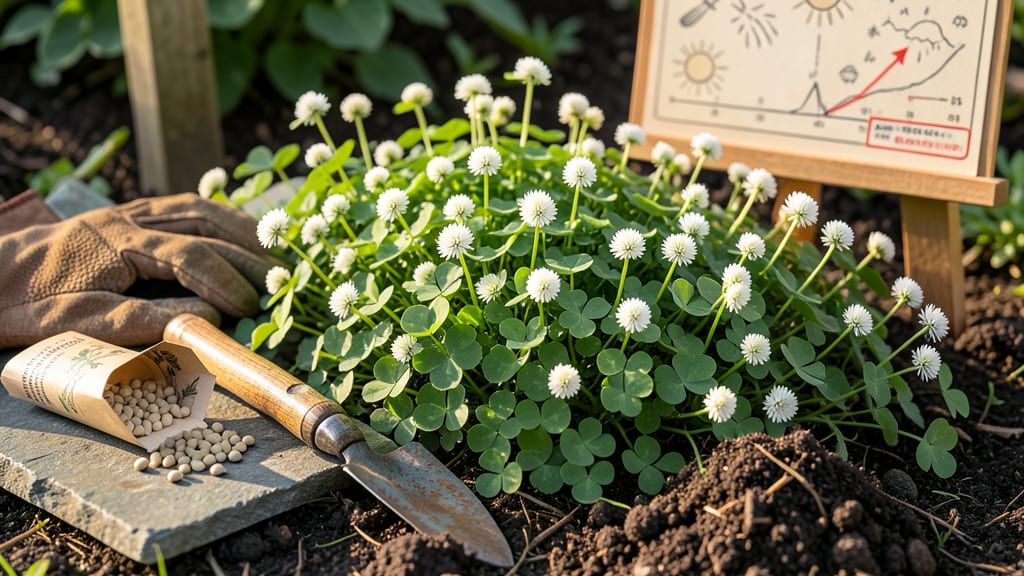
Timing your clover planting in Utah could mean the difference between a thriving ground cover and wasted effort—especially in high-altitude zones where frost lingers longer and summer heat arrives fast.
If you've ever struggled to establish 🌱 clover in Utah's 5-9 zones, you're not alone. The key lies in understanding when to plant for your specific microclimate, whether you're aiming for early spring or late summer/fall establishment.
I'll walk you through the exact windows for red, white, and crimson clover varieties, plus how to adjust for Utah's unique soil types and elevation changes that affect planting success.
By the end, you'll know precisely when to prepare your soil, which varieties thrive best in your area, and how to give your clover the best chance to establish before summer's heat or winter's frost arrives.
Utah clover planting calendar by altitude Zone 5-7
Utah’s USDA Zones 5-7 demand precise timing for clover success. The last frost date (late April–early May) and first frost (late October–early November) bookend your planting windows. In high-desert areas, soil warms slower, so adjust your schedule 2–3 weeks later than valley regions.
For spring planting, aim for mid-March to early April in lower elevations (Zone 7) and late April for mountain zones (Zone 5).
This gives seedlings time to establish before summer heat arrives. Fall planting works best from mid-August to early September, allowing roots to grow before winter dormancy.
Clover thrives in 50–60°F soil temperatures. Use a soil thermometer to confirm readiness—planting too early in cold soil leads to poor germination. In Utah’s high-altitude zones, wait until soil reaches 55°F consistently before sowing.
Red clover, the most popular variety, prefers cool-season planting and handles Utah’s short growing season better than white clover. Crimson clover, a spring option, should be planted 2–3 weeks earlier than red clover for faster establishment.
🌱 Utah Clover Planting Guide by Zone & Season
| Zone | Spring Planting Window | Fall Planting Window | Soil Temp Requirement | Notes |
|---|---|---|---|---|
| Zone 5 (Mountain Regions) | Late April–Early May | Mid-August–Late August | 55–60°F | Longer frost risk; use frost cloth. |
| Zone 6 (Valleys & Foothills) | Mid-March–Early April | Early August–Mid-September | 50–55°F | Warmer soils; plant earlier. |
| Zone 7 (Southern Utah) | Late February–Early March | Late July–Early August | 48–52°F | Fastest soil warming; earliest planting. |
⚠️ Pro Tip: For high-altitude zones (Zone 5), consider fall planting—it reduces frost risks and yields stronger spring growth. Use a seed starter for faster germination in cooler soils.
Spring-planted clover benefits from Utah’s long daylight hours (14+ hours in June), accelerating growth. However, summer drought can stress young plants, so mulch heavily after germination. Fall-planted clover avoids this risk by establishing roots before winter.
If you’re seeding pasture mixes, include clover with grasses like orchardgrass or timothy for a balanced forage. In lawn applications, white clover mixes well with Kentucky bluegrass for shade tolerance. Always oversow by 20–30% to account for poor germination in Utah’s thin soils.
Monitor your clover’s progress with weekly checks for weeds—especially in early spring when growth is slow. Hand-pull competitors like cheatgrass or Russian thistle before they outcompete your clover. A pre-emergent herbicide (applied in late winter) can help suppress weeds without harming clover.
For maximum bloom and nitrogen fixation, aim for two full growing seasons before harvesting seed (if applicable). In Utah’s short season, this means planting annual clover varieties like Dixie crimson clover for faster results. Perennial types (e.g., Arrowhead red clover) take 2–3 years to reach peak productivity.
Remember: Utah’s high-desert climate means less rainfall than coastal regions. Irrigate newly planted clover every 5–7 days until established (about 4–6 weeks). Once rooted, reduce to bi-weekly watering to encourage deep roots.
How to adjust planting for Utah’s microclimates and soil types
Utah’s diverse landscapes—from sandy desert soils in southern regions to clay-heavy loam in mountain valleys—demand tailored clover planting strategies. Soil type directly impacts germination rates and drought resilience, so testing your soil’s pH and texture before planting is critical.
A 6.0-7.0 pH is ideal for clover, as it thrives in slightly acidic to neutral conditions.
In high-desert areas like Utah County or Cache Valley, sandy soils drain too quickly, requiring pre-planting compost or mulch to retain moisture. Meanwhile, clay soils in Salt Lake Valley can suffocate roots, so amending with organic matter like aged manure or peat moss improves aeration.
My go-to fix? A 50/50 mix of native soil and compost spread 2-3 inches deep.
For urban gardens in Provo or Ogden, where microclimates create localized heat islands, choose shade-tolerant varieties like white clover (Trifolium repens) for sidewalks or patios. These areas often experience higher temperatures by 5-10°F, so plant in late August to avoid summer heat stress.
In contrast, rural pastures in Box Elder County benefit from red clover (Trifolium pratense) planted in early spring, as its deeper roots handle Utah’s dry summers better.
Irrigation needs vary wildly: Drought-resistant varieties like Alsike clover thrive with bi-weekly watering, while lawn clover mixes require weekly moisture to establish. Always water deeply in the morning to prevent fungal diseases—Utah’s low humidity and high UV exposure make evening watering risky. A drip irrigation system is my top recommendation for consistent moisture without waste.
One often-overlooked factor is slope and elevation. Gardens above 6,000 feet (like in Park City) have cooler soils and shorter growing seasons, so plant white clover in mid-April when soil temps hit 50°F.
Below 5,000 feet (e.g., St. George), red clover can handle May planting but needs shade cloth during peak summer heat. Always check USDA Plant Hardiness Zone maps for your exact location—Utah’s zones range from 5b to 7a!
Finally, mulching is non-negotiable. A 2-inch layer of straw or wood chips retains moisture, suppresses weeds, and regulates soil temperature. For sandy soils, use straw mulch; for clay soils, wood chips break down slower.
Replenish mulch every 3-4 months to maintain its effectiveness. With these adjustments, your clover will outperform expectations in Utah’s toughest conditions! 🌱