
Companion Plants
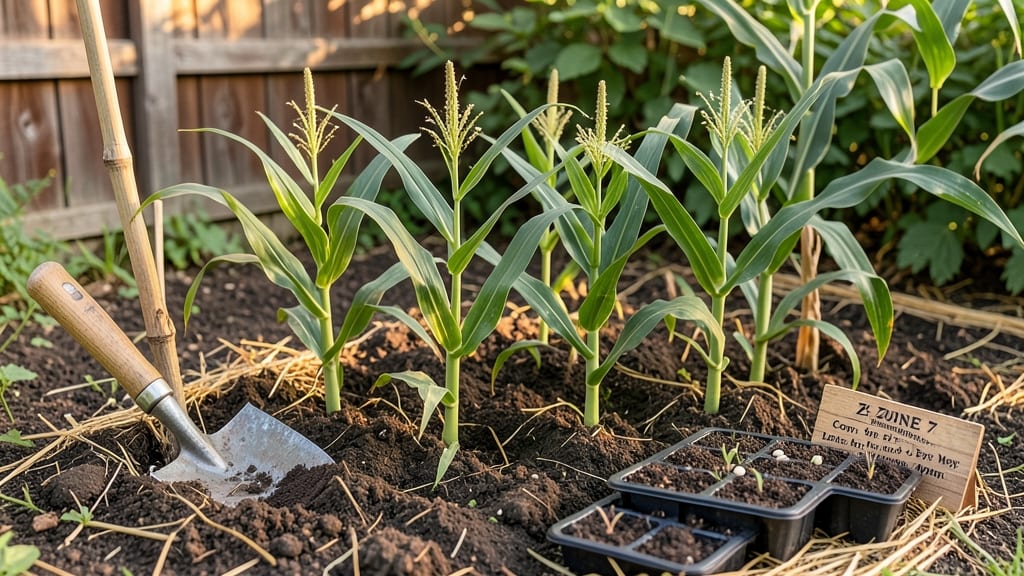
Timing your 🌽 corn planting in Zone 7 isn't just about avoiding frost—it's about giving those tender seedlings the warm soil and long days they crave to grow into towering, ear-filled stalks.
Plant too early, and you risk stunted growth from cold soil; too late, and your harvest shrinks before fall frost hits. The sweet spot? Mid-April to early June, when soil temps hit 60°F+ and danger of frost has passed.
I've seen firsthand how a just-right planting window transforms a patchy garden into a cornfield bursting with plump, juicy ears. But here's the catch: not all corn varieties play by the same rules.
Early maturers like 'Silver Queen' can handle a late-April start, while slower growers need that early June jump to reach maturity before October's chill sets in.
What you're about to discover isn't just a calendar—it's a game-changer for your Zone 7 garden. We'll break down exactly how to read your local frost dates, adjust for soil warmth, and even use companion plants to boost those yields.
Whether you're a first-time grower or a seasoned gardener, these insights will help you maximize every ear on every stalk.
Ready to turn your Zone 7 garden into a corn lover's paradise? Let's get those seeds in the ground at exactly the right moment—because when it comes to corn, timing truly is everything.
The best harvests start with the perfect planting window, and I'm about to show you how to nail it.
Zone 7 corn planting timeline: frost dates, soil temperature & optimal windows
Corn loves warm soil and long summer days, but timing is everything in Zone 7. Plant too early, and your seeds rot in cold soil.
Plant too late, and your harvest suffers from shortened growing seasons. The key? Understanding your last frost date and soil temperature thresholds.
In Zone 7, the average last frost date falls around April 15, but this varies by region. For example, the Piedmont may see frost-free conditions by mid-April, while Appalachian areas might wait until late April.
Always check your local Almanac or USDA Plant Hardiness Zone Map for precision.
Corn seeds need soil temperatures of at least 60°F (15°C) to germinate. Use a soil thermometer to monitor—cold soil delays germination or causes rot. In Zone 7, soil typically hits this threshold by mid-April to early May, depending on your microclimate.
For sweet corn, field corn, and popcorn, the ideal planting window stretches from mid-April to early June.
Early varieties (like 'Early Sunglow') can go in as soon as soil warms, while late varieties (like 'Black Aztec') need a longer season and should wait until late May.
Here’s a quick Zone 7 planting timeline to guide you:
| Stage | Action | Notes |
|---|---|---|
| Soil Prep | Test soil pH (6.0–6.8) | Add compost for fertility |
| Planting Window | Mid-April to early June | Wait for 60°F+ soil |
| Seed Depth | 1 inch deep | Plant in blocks, not rows |
| Germination | 7–14 days | Keep soil moist |
| Harvest Window | Late August to October | Pick when silks brown |
If you’re in a cooler microclimate (like higher elevations in Appalachia), consider using row covers or black plastic mulch to warm the soil faster. For hotter areas (like the Piedmont), focus on shade cloth during extreme heat to protect young plants.
Pro tip: Plant succession crops every 2 weeks after your initial planting to stretch your harvest. This works especially well for sweet corn, which has a shorter shelf life once picked.
For example, if you plant your first batch on April 20, follow up with May 5 and May 20 for a continuous harvest.
Remember, corn needs full sun (6–8 hours daily) and consistent moisture, especially during tasseling and ear development. In Zone 7, summer heat can dry out soil quickly, so mulch heavily to retain moisture and regulate temperature.
For popcorn or field corn, which have longer maturity dates (up to 120 days), start seeds indoors 4–6 weeks before your last frost date. Transplant seedlings outdoors after all danger of frost has passed, typically by mid-May.
Finally, keep an eye on your local weather forecasts—unexpected late frosts can still occur in Zone 7, especially in Appalachian valleys. If frost is predicted, cover young plants with frost blankets or row covers to protect them.
How to adjust corn planting for early vs. late varieties in Zone 7
Zone 7 gardeners face a unique challenge: balancing corn’s long growing season (90–120 days) with the region’s shorter frost-free window (180 days). Choosing the right corn variety and planting strategy can mean the difference between a bountiful harvest and disappointing ears.
Let’s break down how to time your plantings for maximum success.
Early-maturing varieties (like 'Early Sunglow' at 85 days) are your best bet for early spring plantings (mid-April). These varieties tolerate cooler soils and can even handle light frosts once established.
Late-maturing types (such as 'Black Aztec' at 110+ days) require warmer soil temperatures (65°F+) and should be planted no later than early June to mature before frost.
| Variety Type | Days to Maturity | Best Planting Window | Zone 7 Success Tip |
|---|---|---|---|
| Early (Sweet Corn) | 60–85 days | Mid-April to late May | Use black plastic mulch to warm soil faster. |
| Mid-Season | 90–100 days | Late April to early June | Ideal for succession planting every 2 weeks. |
| Late (Popcorn/Field) | 110–120+ days | Early May to mid-June | Plant near a south-facing fence for heat. |
For succession planting, stagger your plantings every 2 weeks in May to ensure a continuous harvest. For example, plant 'Silver Queen' (90 days) on May 1, May 15, and June 1 for ears ready in July, August, and September.
This strategy works especially well in Zone 7’s humid summers, where corn can mature quickly if planted at the right time.
Heat tolerance is another critical factor. Late-maturing varieties like 'Country Gentleman' (115 days) thrive in Zone 7’s summer heat but need consistent watering (1–2 inches per week) to prevent ear rot. If your summer is unusually hot, consider shade cloth during tasseling to protect pollen.
Don’t overlook regional microclimates. Areas like the Piedmont (warmer) can support later plantings, while Appalachian foothills (cooler) may need earlier varieties. Always check your local frost dates—some Zone 7 areas (like Roanoke) have later last frosts than others (like Atlanta).
Pro tip: If you love fresh corn all season, pair early and late varieties. Plant 'Golden Bantam' (80 days) for June harvests and 'Mammoth Melting' (110 days) for September feasts. With the right mix, you’ll enjoy homegrown corn from summer through early fall! 🌽