
Plants
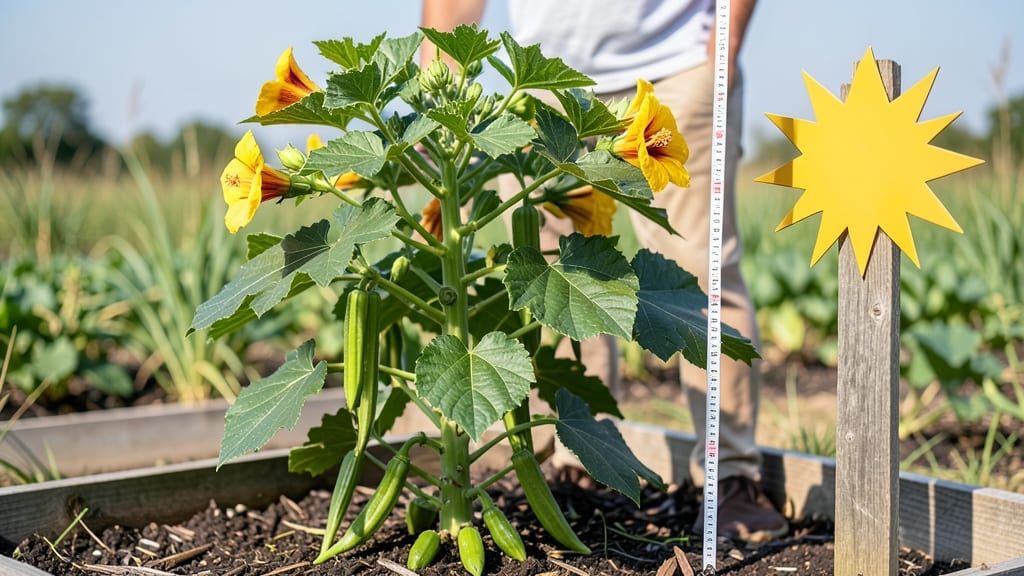
Okra plant height by variety: from compact to towering giants
Okra plants are known for their impressive height, but the exact size depends heavily on the variety you choose. If you're planning your garden layout, knowing these differences can help you decide between space-saving dwarf types or towering giants that need room to stretch.
Most okra varieties fall between 3 to 10 feet at maturity, but some can reach even taller with proper care.
For gardeners with limited space, dwarf varieties like 'Burgundy' or 'Little Lady' are excellent choices, typically staying between 3 to 5 feet. These compact plants are perfect for containers or small gardens, making them ideal for urban gardeners or those with limited yard space.
On the other hand, traditional varieties like 'Clemson Spineless' or 'Emerald' can easily grow 8 to 10 feet tall, requiring more room to spread out.
Here’s how okra height varies by variety, along with spacing recommendations to ensure healthy growth and easy harvesting:
When selecting a variety, consider not just the height but also the pod length and harvest window. Taller varieties like 'Clemson Spineless' produce longer pods, ideal for stir-fries or stews, while dwarf varieties yield smaller pods perfect for quick cooking or grilling.
If you're growing okra in containers, choose a dwarf variety and ensure the pot is at least 12 inches deep to accommodate root growth.
Proper spacing is crucial for okra health. Overcrowding can lead to pests, diseases, and poor air circulation, which stunts growth. For standard varieties, maintain 18 to 24 inches between plants, while dwarf types can be spaced 10 to 12 inches apart.
If you're growing okra near a fence or trellis, leave extra space to avoid shading neighboring plants.
Another factor influencing height is the growing method. Okra thrives in warm climates (USDA Zones 7–11) and can bolt or grow leggy if temperatures drop below 60°F (15°C).
In cooler regions, start seeds indoors 6–8 weeks before the last frost or use black plastic mulch to warm the soil. This helps okra reach its full height potential without stress.
For those in small spaces, vertical gardening is a game-changer. Use a trellis, cage, or tall stakes to guide okra upward, saving garden real estate while still enjoying a bountiful harvest. Just ensure the support structure is sturdy, as mature okra plants can become top-heavy with large pods.
If you're a first-time okra grower, I recommend starting with a medium-height variety like 'Emerald' or 'Jinbu'. These strike a balance between manageable size and productive yields, making them forgiving for beginners. Once you're comfortable, experiment with taller varieties to see how they perform in your specific climate.
Remember, the height of your okra plants isn’t just about aesthetics—it directly impacts your harvest success. Taller plants may produce more pods, but they also require more water, nutrients, and support. Plan accordingly, and you’ll enjoy a thriving okra patch that fits perfectly in your garden! 🌱
How okra growth habits affect your garden layout and harvesting strategy
Okra’s rapid vertical growth can transform your garden layout if you’re not prepared. Knowing how to manage its height helps you plan for optimal spacing, support structures, and harvest timing—all of which directly impact your yield.
Without proper planning, those towering stems can crowd out neighboring plants or become unwieldy to maintain. Let’s break down how to work with okra’s growth habits for a thriving, organized garden.
One of the first decisions you’ll face is whether to let okra grow freely or guide it upward. Trellising okra is a game-changer for small gardens or containers, saving space while improving airflow and reducing disease risk.
A sturdy 6-foot trellis or even a simple tomato cage can support standard varieties, turning a potential space hog into a vertical harvest powerhouse. This method also makes harvesting easier—no more bending over for pods hidden in dense foliage!
If you’re growing dwarf varieties like ‘Burgundy’ or ‘Emerald,’ you can skip trellises entirely and enjoy compact plants perfect for containers or small plots. These varieties typically max out at 3–5 feet, making them ideal for balconies or urban gardens.
Just ensure they get full sun exposure and well-draining soil to prevent legginess, even at smaller sizes.
Pruning is another tool to manage okra’s height and improve productivity. Pinch off the top buds when plants reach 3–4 feet tall to encourage bushier growth and more lateral branches where pods develop.
This technique works especially well for standard varieties like ‘Clemson Spineless,’ which can otherwise shoot up to 8–10 feet without intervention. Just avoid over-pruning—leave enough foliage to support photosynthesis.
Timing your harvest is equally critical. Okra pods mature quickly, often within 5–7 days of appearing, so frequent checks are a must. Harvesting pods at 3–4 inches long ensures tender texture and encourages the plant to produce more.
If you ignore this window, pods toughen up and the plant may focus energy on seed production instead of new growth. For taller varieties, this means reaching up often—or setting up a small stool to avoid back strain!
Finally, consider your garden’s long-term layout when planting okra. Since it’s a warm-season annual, treat it as a temporary but impactful addition. Place it where it won’t outcompete perennials or shade out slower-growing plants.
For example, okra thrives near corn or peppers but may overwhelm delicate herbs like basil. With the right strategy, okra’s height becomes an asset rather than a challenge!