
How To
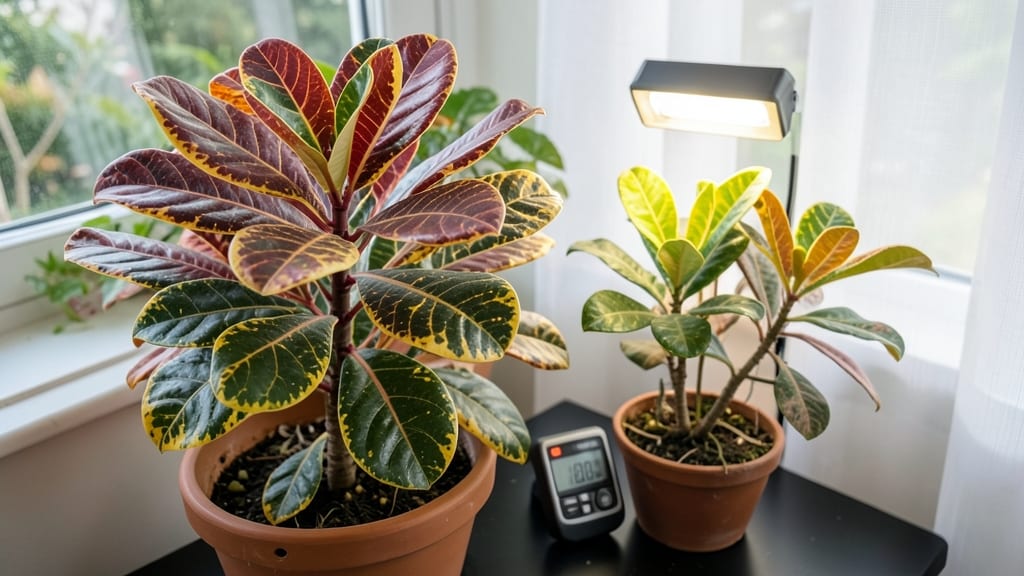
If your Croton 🌿 plant’s leaves are losing their vibrant colors or drooping, how much light does a Croton plant need might be the key question.
Crotons thrive in bright, indirect sunlight—too little, and they’ll stretch toward the nearest window like a sunbather craving warmth, while too much direct sun can scorch those stunning variegated leaves.
Understanding exactly how much light your Croton needs is the key to keeping it lush and healthy. Whether you're dealing with a 6a climate or an indoor setup, I’ll break down the ideal lighting conditions and how to spot when your plant is begging for more (or less) sunshine.
From placing your plant near an east-facing window to adjusting for seasonal changes, we’ll cover all the basics. You’ll learn how to create the perfect light environment—whether indoors or outdoors—to keep your Croton thriving year-round.
Ready to transform your plant’s health? Let’s dive into the secrets of bright, indirect light that will make your Croton’s foliage pop with color and life.

Ideal light requirements for croton plants: bright indirect sunlight explained
Crotons (Codiaeum variegatum) thrive under bright indirect sunlight, which mimics their natural tropical habitat. Without the right light, their stunning variegated leaves lose vibrancy and may even revert to plain green.
The key is finding that sweet spot between too little light (which weakens growth) and too much direct sun (which causes leaf burn).
In nature, crotons grow under the dappled shade of forest canopies, receiving filtered sunlight that’s intense but never harsh. Recreating this environment indoors or outdoors ensures your plant stays lush and healthy.
For best results, aim for 6 to 8 hours of bright, indirect light daily, adjusted slightly based on your climate and season.
🌿 Bright Indirect Light Requirements for Crotons
| Light Condition | Ideal Duration | Best Placement | Seasonal Adjustments |
|---|---|---|---|
| Bright Indirect Light | 6–8 hours daily | East-facing window or 3–5 feet from south-facing window | Spring/Fall: Full exposure Summer: Filter with sheer curtain |
| Direct Morning Sun | 1–2 hours max | Outdoor patio with morning shade | Winter: Can tolerate more direct sun |
| Low Light | Not recommended | North-facing window or dim corner | Leggy growth; supplement with grow lights |
| Harsh Afternoon Sun | Avoid entirely | West or south-facing windows without filters | Immediate leaf scorch risk |
For indoor crotons, an east-facing window is ideal because it provides gentle morning sunlight without the intense afternoon heat. If your space only has a south-facing window, place your croton 3 to 5 feet away to diffuse the light.
A sheer curtain can further soften harsh rays, preventing leaf burn while still delivering enough brightness.
Outdoor crotons fare best in partial shade, such as under a tree canopy or on a covered patio. In USDA Zone 6a, where temperatures can fluctuate, bring potted crotons indoors when nighttime temps drop below 50°F.
This prevents cold stress, which weakens the plant’s ability to process light efficiently.
Seasonal changes require slight adjustments. During spring and fall, when sunlight is less intense, you can move your croton closer to a window to maximize exposure.
In summer, when UV rays are strongest, provide afternoon shade or rotate the plant quarter-turns weekly to ensure even light distribution and prevent lopsided growth.
If you notice new growth reverting to green, it’s a clear sign your croton isn’t getting enough light. The variegated patterns rely on sufficient light to maintain their colorful pigmentation.
Conversely, brown crispy edges or bleached patches indicate too much direct sun. Addressing these issues promptly keeps your croton’s foliage vibrant and healthy year-round.
Pro tip: Use a light meter (or your phone’s light sensor app) to measure light levels. Aim for 10,000 to 15,000 lux—the sweet spot for crotons. If your space falls short, supplement with a full-spectrum LED grow light for 12–14 hours daily to mimic natural sunlight cycles.
Remember, crotons are light-hungry plants, but they’re also forgiving if adjusted gradually. If you’re transitioning your croton to a new light spot, do it over 7–10 days to avoid shocking the plant. This slow acclimation helps maintain its foliage vibrancy and overall health.
Ideal light requirements for croton plants: bright indirect sunlight explained
Crotons thrive in bright indirect light, making them perfect for east or north-facing windows. These plants crave 6+ hours of filtered sunlight daily—think dappled shade under a sheer curtain rather than harsh midday rays.
Without enough light, their stunning variegated leaves lose their vibrant colors, turning dull and green. Too much direct sun, especially hot afternoon rays, can scorch leaves, leaving crispy brown edges.
For outdoor crotons, morning sun is ideal, while afternoon shade protects their delicate foliage. In low-light conditions, growth slows dramatically, and stems stretch toward any available light—a condition called etiolation.
This weakens the plant and reduces its ornamental value. The key is finding that golden balance where leaves stay lush and colors remain bold.
| Light Requirement | Specification | Indoor Spot |
|---|---|---|
| Minimum Daily Light | 6+ hours bright indirect | East-facing window |
| Direct Sun Tolerance | Morning sun only (1-2 hours) | South window with sheer curtain |
| Low-Light Warning Signs | Leggy growth, pale leaves | North-facing window |
| Over-Sun Warning Signs | Brown leaf edges, crispy texture | West-facing window (afternoon sun) |
| Seasonal Adjustment | Rotate pot ¼ turn weekly | Any bright spot |
If your croton lives indoors, rotate its pot quarter-turn weekly to ensure even light exposure. This prevents one side from becoming lopsided or pale while the other stays dark. For outdoor crotons, move them to partial shade during peak summer heat (12 PM–4 PM) to avoid leaf burn.
In cooler months, they can handle more direct sunlight as temperatures drop.
Watch for seasonal light changes—shorter winter days mean you may need to supplement with a grow light (more on this in Section 3). Place the light 12–18 inches above the plant for 12–14 hours daily.
Avoid placing crotons near air conditioning vents or heating ducts, as fluctuating temperatures stress the plant and interfere with light absorption.
Pro tip: Use a light meter app (like PlantNet or Groovy) to measure 1,000–2,000 foot-candles of light—this is the sweet spot for crotons. If your reading drops below 500 foot-candles, it’s time to relocate or add artificial lighting.
Remember, consistency is key—sudden light changes shock crotons, causing leaf drop or wilting.
For new croton owners, start with the easiest spot: an east-facing window. If leaves begin losing color within 2–3 weeks, gradually move the plant closer to the light source over 5–7 days.
This slow adjustment helps the plant acclimate without shock. With the right light, your croton will reward you with bold, multicolored foliage year-round.