
Trees
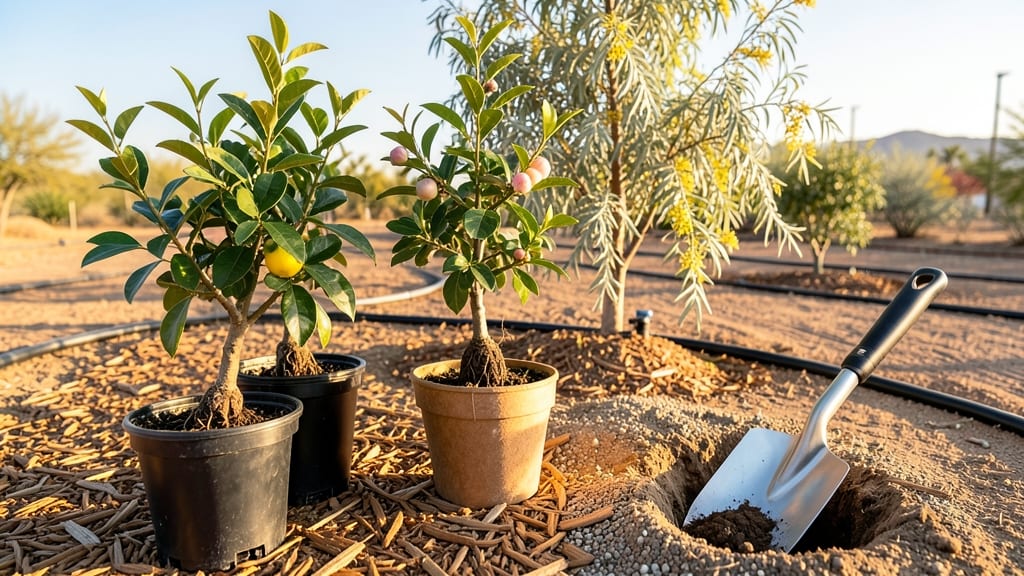
Planting fruit trees in Arizona isn’t just about picking the right variety—it’s about mastering the perfect timing to beat the desert’s brutal heat and unpredictable frost.
With temperatures swinging from 110°F summers to rare winter chills, getting those roots in the ground during the 4-month window of November through February makes all the difference between a thriving orchard and a sad, wilted investment.
Why does this matter? Because Arizona’s USDA Zone 9b climate demands precision. Plant too early, and your 🍎 fruit trees face scorching heat stress. Too late, and they struggle to establish roots before the next growing season.
The key? Cool winter months when soil stays workable and trees enter dormancy—nature’s built-in survival mode. Let’s break down exactly when to plant for zero-frost success.
You might assume all fruit trees follow the same rules, but citrus and stone fruits have wildly different needs. Citrus, like oranges and lemons, can handle Arizona’s mild winters, while peaches and apples need careful timing to avoid early blooms caught in a late frost.
I’ll show you how to match your tree to the calendar—plus pro tips for urban yards where space (and shade) is limited.
Ready to skip the guesswork? By the end, you’ll know not just when to plant, but how to prep soil, choose the right varieties, and adjust for your specific corner of Arizona—whether you’re in Phoenix’s low desert or Flagstaff’s high country. Let’s get those trees growing right.
Best months to plant fruit trees in Arizona’s zero-frost zones (8A-11)
Arizona’s zero-frost zones (8A-11) create a unique challenge for fruit tree growers. Unlike cooler climates, timing isn’t just about avoiding frost—it’s about escaping the 110°F+ summers and leveraging the mild winters.
The best window to plant is during the dormant season, from November through February, when temperatures are cooler and rainfall is more predictable.
This period aligns with Arizona’s natural rainfall patterns, reducing the need for immediate irrigation. For bare-root trees, planting in December or January gives roots time to establish before the heat ramps up.
Container-grown trees can handle October or March planting, but they’ll need extra shade and water during the transition.
Here’s the critical timeline for Arizona fruit tree planting:
| Month | Best For | Key Considerations |
|---|---|---|
| November | Bare-root citrus, figs, pomegranates | Soil temps ideal; minimal heat stress |
| December | All fruit trees (peak window) | Cooler nights; higher chance of rain |
| January | Stone fruits (peaches, plums), deciduous trees | Avoid planting if temps drop below 40°F |
| February | Container-grown trees, late citrus | Watch for early heat spikes; mulch heavily |
| March | Urban areas with shade | Risk of transplant shock increases; water daily |
Arizona’s microclimates play a huge role in success. In Phoenix and Tucson (Low Desert), where temps can hit 90°F by March, planting after February 15th risks heat stress.
Meanwhile, Flagstaff and Prescott (High Desert) can experience freeze warnings as late as March, so aim for October-November to avoid late frosts.
For citrus trees, which thrive in Arizona’s USDA Zones 9b-11, the ideal window is November through January.
These trees despise cold snaps below 28°F, so planting in December gives them a buffer. Stone fruits like peaches and plums need a chill period, so plant them in January or February in the High Desert.
Soil preparation is non-negotiable in Arizona. The alkaline soil (pH 7.5-8.5) and poor drainage in many areas can suffocate roots. Amend your soil with compost and gypsum to improve structure, and consider raised beds in urban areas where soil compaction is an issue.
A 4-inch layer of mulch will retain moisture and regulate soil temps.
Watering strategy is your secret weapon during the first 3 months. Newly planted trees need deep watering 2-3 times per week in summer, but reduce to weekly in cooler months.
Use drip irrigation to deliver water directly to the root zone, minimizing evaporation. Avoid overhead watering—it can burn leaves in the intense Arizona sun.
If you’re planting in urban areas, like Phoenix or Tucson, choose dwarf or semi-dwarf varieties to fit small yards. These trees also benefit from afternoon shade during the hottest months.
For rural or agricultural zones, larger varieties like ‘Desert Gold’ navel orange or ‘Sugar Belle’ peach thrive with full sun exposure and well-draining soil.
Pro tip: Acclimate container-grown trees for 1-2 weeks before planting by gradually exposing them to outdoor conditions. Harden them off in partial shade first, then move them to their full-sun location over 3-5 days. This reduces transplant shock and improves survival rates.
Best months to plant fruit trees in Arizona’s zero-frost zones (8A-11)
Arizona’s zero-frost zones (8A-11) create a unique opportunity to grow fruit trees year-round, but timing is everything. Unlike northern climates, you don’t need to wait for spring—your ideal planting window is during the cool, dormant season when trees establish roots without heat stress.
This means November through February is prime time, with December and January being the sweet spot for most varieties.
Why winter? Cooler temperatures reduce transplant shock, while minimal evaporation ensures moisture stays in the soil. Plus, you avoid Arizona’s brutal summer heat, which can fry young roots. For citrus trees, this window is even more critical—they’re tropical and hate temperature swings.
Here’s the breakdown by fruit type and microclimate, including soil prep and irrigation strategies for desert survival:
| Fruit Type | Best Planting Months | Microclimate Notes | Soil Prep |
|---|---|---|---|
| Citrus (Oranges, Lemons, Limes) | November–February | Avoid low desert (Phoenix/Yuma) in summer; high desert (Flagstaff) can plant slightly later. | Well-draining, sandy loam + compost. pH 6.0–7.0. |
| Stone Fruits (Peaches, Plums, Cherries) | November–January | High desert (Flagstaff) can handle bare-root trees in early spring. | Amend with organic matter; avoid clay-heavy soils. |
| Pome Fruits (Apples, Pears) | November–December | Need cross-pollination; plant 2+ varieties. | Deep, well-aerated soil; add gypsum if compacted. |
| Figs, Pomegranates, Persimmons | October–March | Drought-tolerant; ideal for urban gardens. | Minimal prep; mulch heavily to retain moisture. |
For container-grown trees, you can plant up to March, but prioritize bare-root trees in winter—they establish faster. Always water deeply after planting (15–20 gallons per tree) and mulch 3–4 inches deep to lock in moisture.
Avoid planting in urban heat islands (like downtown Phoenix) unless you provide shade cloth for the first year.
Pro tip: Test your soil before planting—Arizona’s alkaline soils often need sulfur or peat moss to adjust pH. For citrus, aim for 6.0–7.0 pH; stone fruits prefer 6.0–6.5. If your soil is sandy, add compost to improve water retention.
Timing isn’t just about months—it’s about microclimates. In Yuma, plant earlier (October–November) to beat summer heat, while Flagstaff can extend to March due to cooler temps. Always check local frost dates (even high desert areas can dip below 28°F in winter).