
Plants
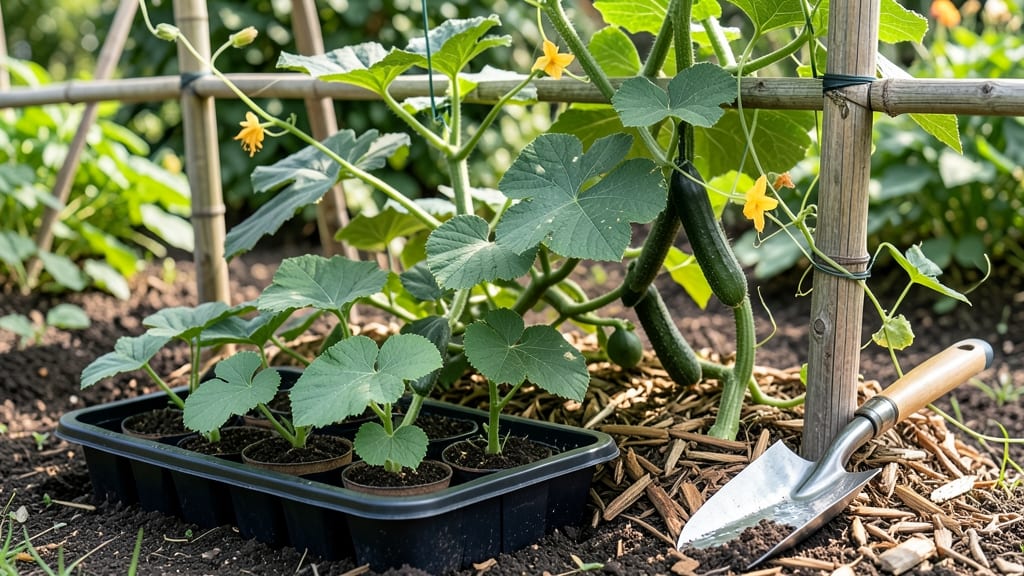
Timing your cucumber planting in New Hampshire can mean the difference between a bountiful harvest and wasted effort. With USDA zones 5a-6b and unpredictable spring weather, knowing the exact window to plant 🥒 cucumbers is critical.
Plant too early, and frost will kill tender seedlings; too late, and your vines won’t have enough time to produce before fall’s chill sets in.
Most NH gardeners wait until mid-May to early June, after the last frost date, when soil temperatures consistently reach 60°F. But there’s more to it than just dates—microclimates across the state, from the White Mountains to the Seacoast, can shift your ideal planting window by weeks.
I’ll break down the precise timing, soil prep, and even how to extend your season with protective covers.
Whether you’re a first-time gardener or a seasoned pro, getting this right ensures your cucumbers thrive from July through September. Let’s dive into the exact steps to maximize your harvest, avoid common pitfalls, and keep those vines productive all summer long.
From choosing the right varieties to adjusting for your specific corner of New Hampshire, you’ll learn how to turn your garden into a cucumber powerhouse. Ready to grow crisp, abundant 🥒 cucumbers without the guesswork? Let’s get started.
New Hampshire’s exact cucumber planting calendar: weeks to avoid bolting
New Hampshire’s short growing season and unpredictable frost dates demand precision when planting cucumbers. The ideal window is mid-May to early June, but timing depends on your last frost date and soil temperature.
Planting too early risks cold stress, while waiting too long cuts harvest time. Let’s break down the exact weeks to plant—and which to avoid.
Your first step is knowing your average last frost date. In NH, this typically falls between May 10–20, but it can vary by 1–2 weeks depending on your region.
For example, Portsmouth often sees frost-free soil by May 15, while White Mountains may wait until June 1. Always wait until the soil temperature reaches 60°F—cucumbers won’t germinate in cooler soil.
Here’s the golden rule: Plant cucumbers outdoors only after the last frost date and when the ground is warm. If you’re in a warmer microclimate (like the Seacoast), you might start direct sowing as early as late April under row covers.
But in cooler zones (like the North Country), hold off until early June to avoid bolting—when plants flower prematurely due to stress.
For transplants, start seeds indoors 3–4 weeks before your last frost date. This means sowing by late April for most of NH, so seedlings are ready to harden off and transplant by mid-May.
Harden off seedlings by gradually exposing them to outdoor conditions over 7–10 days to prevent shock.
| Planting Method | Ideal Planting Window | Soil Temp Requirement | Risk if Planted Too Early |
|---|---|---|---|
| Direct Sowing (Outdoors) | Mid-May to early June | 60°F+ | Slow germination, rot, bolting |
| Transplanting (Seedlings) | Late May to early June | 55°F+ (soil), 60°F+ (air) | Transplant shock, stunted growth |
| Early Start (Row Covers) | Late April (protected) | 50°F+ (with protection) | Fungal diseases, weak plants |
| Late Start (Succession) | Early July (for fall harvest) | 60°F+ | Limited harvest before frost |
If you’re planting cucumbers in containers, follow the same soil temperature rules but choose compact varieties like ‘Bush Champion’ or ‘Spacemaster.’ Containers warm up faster, so you might plant 1 week earlier than in-ground plants. Just ensure pots have drainage holes and use lightweight potting mix to prevent waterlogging.
For extended harvests, try succession planting every 2 weeks from mid-May to early July. This ensures a steady supply of fresh cucumbers from July through September.
Choose heat-tolerant varieties like ‘Straight Eight’ or ‘Marketmore’ for late-season success. These varieties handle NH’s hot summers and short days better than delicate types.
Avoid planting cucumbers in NH after mid-July unless you’re using row covers or black plastic mulch. Late plantings risk stunted growth or frost damage before harvest. Instead, opt for fast-maturing varieties (like ‘Early Green Cluster’) if you’re pushing the season.
Always monitor weather forecasts and have row covers ready for unexpected late frosts.
Pro tip: Use a soil thermometer to confirm 60°F soil temps before planting. Cold soil delays germination and invites damping-off disease. If your soil is still chilly, mulch with black plastic to warm it faster.
This trick adds 2–3°F to soil temperature and speeds up growth in cooler NH zones.
Finally, mark your calendar for mid-October—that’s when first frost typically hits NH. Plan to harvest all cucumbers before September 30 to avoid bitter, frosted fruit. If you have unripe cucumbers on the vine, pick them and ripen indoors
5 Critical factors that determine your NH cucumber planting success
New Hampshire’s microclimates can shift your cucumber planting window by weeks—especially between the White Mountains and Seacoast regions. Elevation alone can delay your last frost by 2-3 weeks, so don’t rely on statewide averages.
For example, Portsmouth may be frost-free by May 10, while Mount Washington could still see frost in June.
Check your local USDA Zone 5a-6b and use the NH State Climate Office’s frost date maps. Even within 10 miles, frost dates can vary by 10 days.
I once planted cucumbers in Durham on May 15 only to lose them to a late frost—until I adjusted for my south-facing slope, which warmed 5°F faster than my neighbor’s north-facing yard.
Soil temperature is your second critical factor. Cucumbers won’t germinate below 60°F, and roots struggle below 55°F. Use a soil thermometer to confirm—don’t guess! In northern NH, I wait until late May even if frost risk drops, because cold soil stunts growth.
Pro tip: Black plastic mulch can raise soil temps by 5-10°F, letting you plant 2 weeks earlier.
Use a soil thermometer to confirm 60°F+ before planting.
Compare your yard to NH State Climate Office frost data.
Add mulch 1 week before planting to warm soil faster.
Ensure 6+ hours of sun—no shade from trees or buildings.
Your cucumber variety also dictates timing. Bush types like ‘Bush Champion’ mature 50 days faster than vining ‘Straight Eight,’ so they’re ideal for late May plantings. Heat-tolerant varieties like ‘Marketmore 76’ handle NH’s July heat waves better than standard slicers.
I’ve grown ‘Sweet Success’ in Concord for years because it resists bolting in 90°F+ temps—critical for our short growing season.
Don’t overlook row covers or cold frames to extend your season. In Zone 5a, I’ve used floating row covers to plant cucumbers as early as April 20 (with black plastic mulch underneath).
Remove covers when flowers appear to prevent heat stress. For late-season harvests, try ‘Diva’ cucumbers, which produce in 55 days—perfect for August plantings before frost.
Finally, test your soil pH (ideal: 6.0-6.8) and amend with compost or aged manure 2 weeks before planting. In acidic NH soils, a lime application can boost yields by 30%.
I once added pelletized chicken manure and saw cucumbers 2 weeks earlier—proof that soil prep is just as critical as timing.