
Plants
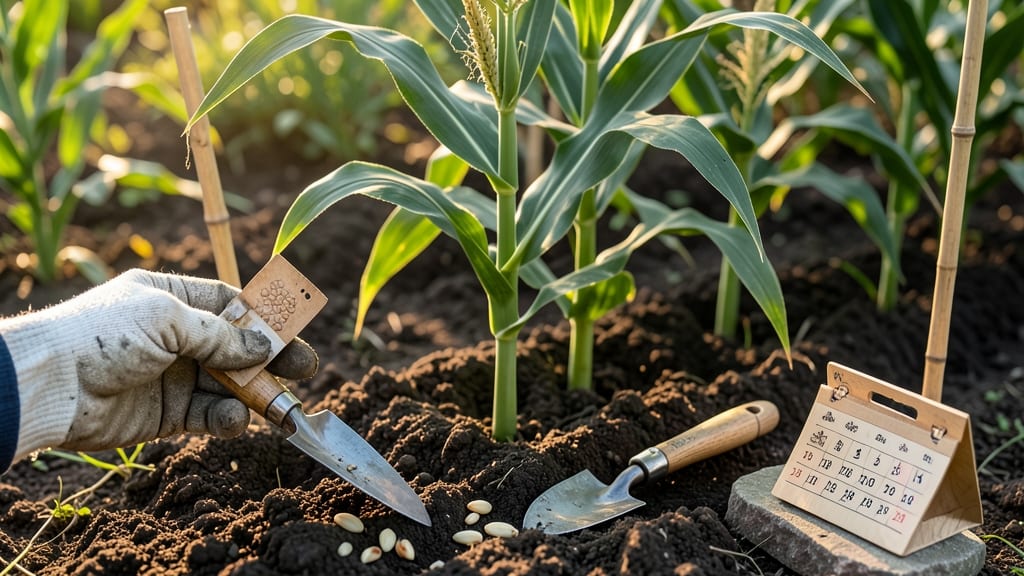
Timing your 🌽 corn planting in Iowa isn't just about following a calendar—it's about dodging frost, warming soil, and setting your crop up for a record harvest.
With USDA Zone 5a-6b springs that can swing from icy to sweltering in weeks, getting those seeds in the ground too early or too late means wasted effort (or worse, no crop at all).
Most Iowa gardeners and farmers swear by planting between mid-April and early June, but the real magic happens when soil temperatures hit 60°F—not just air temps. That’s your cue to grab those seeds, because cold soil delays germination and leaves your corn vulnerable to rot.
Trust me, rushing it is a one-way ticket to disappointment.
Here’s the game-changer: two weeks after your last frost date is your sweet spot, but Iowa’s frost dates can shift by weeks. We’ll break down exactly how to adjust for early, normal, and late varieties so you’re planting with confidence—not guesswork. Ready to turn your corn patch into a goldmine?
From succession planting tricks to heat-tolerant varieties that thrive in Iowa’s late-July heat, I’ll walk you through every step to maximize your yield. Let’s get those kernels popping!
Iowa corn planting calendar: exact dates by soil temperature and frost risk
Planting corn in Iowa isn’t just about the calendar—it’s about soil temperature and frost risk. Corn seeds need consistent warmth to germinate, and Iowa’s USDA Zone 5 climate means waiting too long can shorten the growing season.
According to Iowa State University Extension, the ideal window balances these factors for maximum yield.
The last average frost date in Iowa typically falls around April 15, but this varies yearly. For corn, you should plant 2–3 weeks after this date to ensure no surprise frosts.
However, soil temperature is the real game-changer—corn thrives when the soil reaches 60°F (15.5°C) at a depth of 4 inches.
Here’s how to align your planting schedule with Iowa’s climate patterns based on soil temperature and historical frost data:
| Planting Window | Soil Temperature | Average Last Frost Date | Risk Level | Notes |
|---|---|---|---|---|
| Mid-April | 50–55°F (10–13°C) | April 1 (early) | High (late frost) | Use early-maturing varieties (e.g., 'Golden Bantam'). |
| Late April | 55–60°F (13–16°C) | April 15 (average) | Moderate | Best balance for standard varieties (e.g., 'Silver Queen'). |
| Early May | 60°F+ (15.5°C+) | April 30 (late) | Low | Ideal for late-season varieties (e.g., 'Pioneer Brand'). |
| Early June | 60°F+ (15.5°C+) | N/A (past frost) | None | Succession planting for extended harvest. |
For maximum yield, aim to plant when soil temperatures are consistently above 60°F. Use a soil thermometer to check daily—this is the most reliable method. If you plant too early (e.g., mid-April), cold soils can delay germination by 1–2 weeks, reducing your growing season.
Iowa’s frost-free period averages 165 days, so late plantings (e.g., early June) may not mature fully. If you choose this route, opt for fast-maturing varieties (e.g., 'Early Sunglow') that can reach harvest in 70–75 days.
Always monitor local forecasts—unpredictable weather can shift your planting window by 1–2 weeks.
Pro tip: Plant test rows 1–2 weeks apart in late April to gauge germination success. This helps you fine-tune your schedule for future years. If your soil stays cold beyond May, consider black plastic mulch to warm the soil faster and extend your planting window.
Remember, corn is sensitive to frost at all stages. Even young seedlings can be damaged by temperatures below 32°F (0°C). If frost is forecasted after planting, cover seedlings with row covers or old blankets until temperatures rise.
Finally, don’t forget to adjust for microclimates. Southern Iowa (e.g., near Ottumwa) has a longer frost-free season than northern areas (e.g., near Mason City). Use these regional differences to your advantage—plant earlier in the south and later in the north if needed.
With these guidelines, you’ll avoid the common mistakes of planting too early (risking frost) or too late (limiting growth). Timing is everything, and Iowa’s climate gives you a 6-week window to get it right—use it wisely! 🌽
How to adjust corn planting time for early, normal, and late varieties
Not all corn is created equal—and neither are planting schedules. In Iowa’s USDA Zone 5, selecting the right corn variety and adjusting your planting window can mean the difference between a bountiful harvest and a disappointing yield.
Early-maturing varieties thrive when planted sooner, while late-season types need extra time to mature before fall frosts strike.
Iowa’s growing season averages 165 frost-free days, but this varies by year. For example, early varieties like 'Early Sunglow' (60–70 days to maturity) can handle planting as early as late April, while standard varieties like 'Pioneer Brand 33B15' (90–100 days) need to go in by mid-May.
Late varieties like 'Golden Bantam' (110+ days) must be planted by early May to avoid frost damage.
| Variety Type | Days to Maturity | Ideal Planting Window | Heat Tolerance | Frost Risk |
|---|---|---|---|---|
| Early (e.g., 'Early Sunglow') | 60–70 days | Late April–early May | Moderate | Low (matures before frost) |
| Standard (e.g., 'Pioneer Brand 33B15') | 90–100 days | Mid-April–mid-May | High | Moderate (needs timely planting) |
| Late (e.g., 'Golden Bantam') | 110+ days | Early May–early June | Low (heat-sensitive) | High (requires early start) |
For early varieties, aim to plant when soil temperatures hit 50°F and stay above 60°F for consistent germination. These types are perfect for succession planting—sow a second crop in early June for a late-summer harvest.
Meanwhile, standard varieties should go in when soil reaches 60°F and at least 2 weeks after last frost (usually mid-May).
Late varieties are trickier in Iowa’s short season. Plant them no later than early June to ensure they mature before the first frost (typically mid-October).
If you’re unsure, opt for semi-dwarf varieties like 'Silver Queen,' which are slightly more heat-tolerant and can handle Iowa’s summer heat better than standard types.
Pro tip: Use a soil thermometer to monitor temperatures—corn seeds need 60°F+ soil to germinate properly. If spring is slow to warm, consider using black plastic mulch to raise soil temperatures faster. And always check Iowa State University’s frost prediction maps for real-time adjustments.
Adjusting your planting schedule based on variety isn’t just about timing—it’s about matching your corn’s needs to Iowa’s unpredictable climate. With the right approach, you’ll avoid frost damage, maximize yield, and enjoy fresh Iowa-grown corn all summer long. 🌽