
Plants
Timing your 🍓 strawberry planting in Pennsylvania isn’t just about the calendar—it’s about outsmarting frost, soil warmth, and variety needs to guarantee a bountiful harvest. Whether you’re growing June-bearing, everbearing, or day-neutral types, planting too early or too late can mean the difference between juicy berries and wasted effort.
Most gardeners in USDA zones 5b-7a swear by early spring (March–April) as the sweet spot, but late summer (August–September) plantings also work—if you play your cards right. The key? Understanding your last frost date (usually around April 15) and how each variety responds to cold snaps.
In this guide, I’ll break down the exact planting windows for Pennsylvania’s climate, plus pro tips for soil prep, frost protection, and post-planting care. By the end, you’ll know whether bare-root or potted strawberries suit your schedule—and how to stretch your harvest from June to October.
Ready to turn your garden into a 🍓 berry bonanza? Let’s dive into the timing secrets that’ll have your plants thriving year after year.
Best strawberry planting months in Pennsylvania by variety (frost-proof timeline)
Pennsylvania’s USDA zones 5b-7a mean frost can strike anytime between March 15–April 15 for spring plantings. To avoid frost damage, time your strawberry planting based on your variety and microclimate.
June-bearing types need cold stratification (4-6 weeks below 40°F), while everbearing and day-neutral varieties adapt better to late spring or fall plantings.
Most gardeners in PA plant bare-root strawberries in early spring, but fall plantings (August–early September) work too—just ensure plants establish roots before first frost (typically mid-October). Southern PA (zones 7a) can push spring plantings to late April, while northern PA (zones 5b) should plant by mid-April to avoid frost.
📋 Key Takeaway: Use your last frost date as your deadline—plant 2–3 weeks before to give roots time to establish. For example, if frost hits April 15, aim for March 20–April 1 plantings.
| Variety Type | Best Planting Window | Frost Risk Note | Harvest Window |
|---|---|---|---|
| June-bearing | March 15–April 15 (spring) OR August 15–September 1 (fall) | High risk if planted after April 15 | June–July (spring-planted) |
| Everbearing | March 20–April 30 (spring) OR August 1–September 10 (fall) | Moderate risk; tolerates slight frost | June–July + September–October |
| Day-neutral | April 1–May 15 (spring) OR August 15–September 15 (fall) | Low risk; produces fruit regardless of day length | June–October (continuous) |
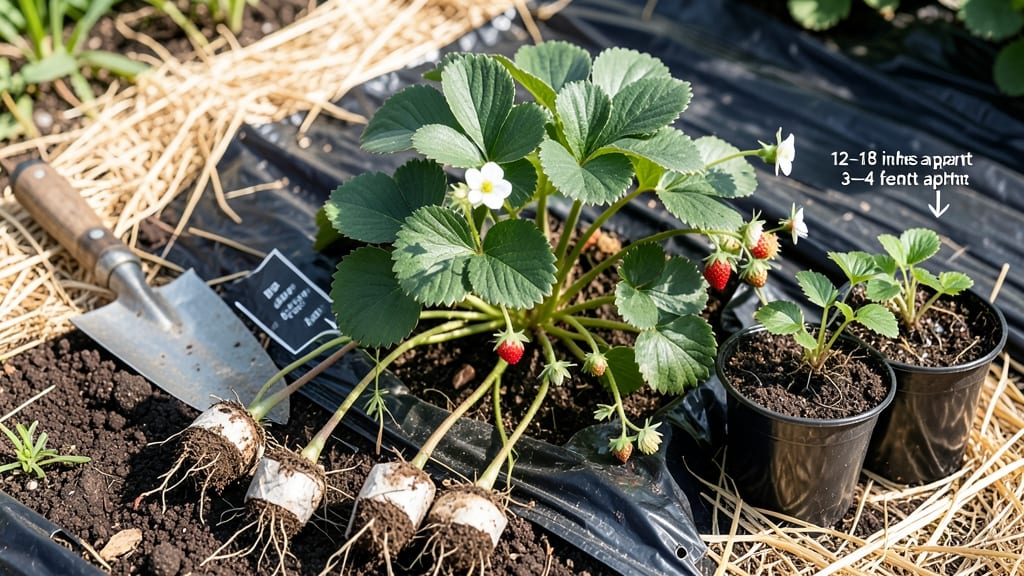
For bare-root strawberries, soak roots in lukewarm water for 30 minutes before planting to revive them. Set the crown (where leaves meet roots) at soil level—burying it too deep causes rot, while exposing it risks drying.
Space plants 12–18 inches apart in rows 3–4 feet apart to allow airflow and reduce disease.
If you’re using potted strawberries, transplant them anytime the soil isn’t frozen, but avoid peak heat (July–August). Container-grown plants need well-draining soil and larger pots (at least 12 inches deep) to prevent root bind. Water thoroughly after planting to settle soil around roots and eliminate air pockets.
Mulch immediately after planting with straw or shredded leaves to retain moisture and suppress weeds. Avoid organic mulches like wood chips, which can harbor fungal diseases like gray mold. In northern PA, add an extra layer of mulch in late fall to insulate roots during winter.
Pro tip: Plant strawberries near borage or thyme to deter pests like slugs and birds. These companion plants also improve soil health and attract pollinators for better fruit set. Avoid planting near potatoes or tomatoes, which compete for nutrients and attract similar pests.
After planting, water deeply every 2–3 days until established (about 4–6 weeks). Reduce watering in late summer to harden off plants before winter. In southern PA, you can extend the season by planting day-neutral varieties in late May for a fall harvest.
🌱 Remember: Strawberries are perennial in PA, meaning they’ll produce fruit for 2–3 years if cared for properly. Year 1 focuses on root establishment, year 2 on fruit production, and year 3 may see reduced yields—plan to replace beds after 3 years to prevent soil-borne diseases.
How to extend your strawberry season in Pennsylvania (frost protection hacks)
Pennsylvania’s unpredictable frost dates can ruin early plantings, but with the right strategies, you can safely extend your strawberry season by 4-6 weeks. Whether you’re planting in late winter or early fall, these frost protection hacks will give your berries the edge they need to thrive.
One of the easiest ways to protect young plants is by using frost blankets or row covers. These lightweight fabrics trap heat and shield plants from temperatures as low as 20°F.
Simply drape them over your strawberry beds in the evening and remove them during the day to allow sunlight and airflow.
For a more permanent solution, consider building a low cold frame. These simple structures made from wood and plastic sheeting can raise soil temperatures by 5-10°F, creating a microclimate perfect for early spring or late fall plantings.
Just ensure the frame is ventilated to prevent overheating during sunny days.
Another game-changer is mulching. Apply a thick layer of straw or pine needles around your strawberry plants to insulate roots and retain moisture. This method works year-round but is especially critical during late fall and early spring when temperatures fluctuate wildly.
If you’re planting in late August or September, focus on everbearing or day-neutral varieties like ‘Seascape’ or ‘Honeoye.’ These types produce fruit throughout the season, giving you a longer harvest window. Pair them with row covers to protect tender new growth from unexpected frosts.
For gardeners in USDA Zone 5b (e.g., Pittsburgh), aim to plant bare-root strawberries in early April and use row covers until May 15. In Zone 7a (e.g., Philadelphia), you can push fall plantings into early October with frost protection, ensuring a September harvest before winter sets in.